In-app purchases vs subscriptions: which should your app use?
One-time purchases, consumables or subscriptions? Learn how each works on Google Play and the App Store, when each fits, and how to avoid upsetting users.
· 4 menit baca
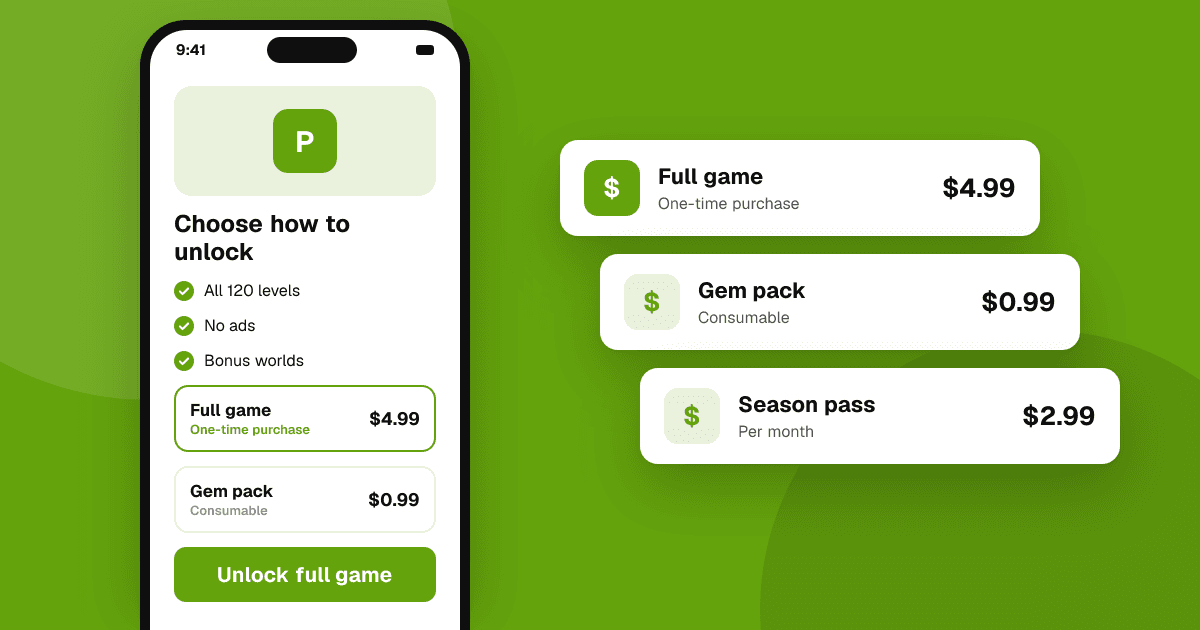
Short answer: use a subscription when your app keeps delivering new value or costs you money every month (content, sync, servers, AI). Use a one-time purchase when the value is a fixed set of features people keep using, like a pro unlock for a tool. Use consumables (coins, hints, extra lives) mainly in games. Whatever you choose, make the price and what it unlocks obvious, and make cancelling or restoring easy.
What types of in-app products are there?
Both Google Play and the App Store support the same basic kinds:
- Consumables: bought, used up and bought again. Coins, hints, lives, credits for a paid service.
- Non-consumables (one-time): bought once and kept forever. "Pro" unlocks, ad removal, extra levels.
- Auto-renewing subscriptions: charged every week, month or year until cancelled. Access to content or features while active.
On the App Store there are also non-renewing subscriptions (a fixed period that doesn't auto-renew), which are less common.
When does a subscription make sense?
Subscriptions fit when value keeps coming:
- New content regularly: lessons, workouts, recipes, levels.
- Services that cost you money: cloud sync, storage, AI features, server processing.
- Ongoing tools for professionals, where the app keeps getting updates they rely on.
They don't fit when the app does one thing that never changes. Users notice when a simple tool asks for a monthly fee, and they leave reviews about it.
When is a one-time purchase better?
- The app is a tool (a calculator, a converter, an editor) whose value doesn't depend on new content.
- Your costs per user are small after they download it.
- You want a simple, trust-building offer: "pay once, keep it".
A one-time price brings in money only when someone new buys, so you need steady new users. Some developers add paid major upgrades or optional extras later.
How do consumables work in games?
Consumables let players spend when they want to speed up or try again. To keep it fair:
- Make the game fun without paying; purchases should save time or add options, not block progress.
- Show real prices clearly, and avoid confusing layers of currencies.
- Be careful with random rewards (loot boxes): some countries regulate them, and both stores require disclosing the odds of randomized paid items. Check current store rules before adding them.
How do I design a fair subscription?
- Explain the value in one line on the paywall: what you get, how much it costs, how often it renews.
- Offer a yearly option with a clear saving next to the monthly one.
- Use free trials honestly. Show when the trial ends and what will be charged. Both stores show trial terms, but your own screen should be just as clear.
- Make cancelling easy. Point users to their store subscription settings. Hiding this leads to angry reviews and refund requests.
- Keep paying users' data safe if they cancel. Let them export or keep read access where possible.
What do the stores take?
Both stores charge a commission on digital sales and subscriptions, with reduced rates for smaller developers and for subscriptions in some cases. The exact numbers and programs change, so read Google Play and App Store fees explained and confirm in Play Console and App Store Connect.
How do I decide for my app?
Answer these questions:
- Does using my app cost me money every month per user? Yes → subscription.
- Is the value a fixed set of features? Yes → one-time purchase.
- Is it a game where players want optional boosts? Yes → consumables, maybe plus an ad-free purchase.
- Not sure? Start with a one-time unlock, which is easier to explain, and learn from user feedback before moving to a subscription.
You can also combine: a free tier, a one-time "lifetime" option and a subscription for cloud features. Just keep the number of choices small.
Next steps
Write one sentence describing what paying users get, and pick the model that sentence fits. Then test it with real people: list your app on TrueLaunch and read reviews about what users value. Continue with how to price your app and how to monetize a free app. This is general guidance, not financial advice.
Frequently asked questions
Are subscriptions better than one-time purchases?
Not always. Subscriptions suit apps with ongoing value or ongoing costs. For simple tools, a one-time purchase is often fairer and easier to sell.
Can I offer both a subscription and a lifetime purchase?
Yes. Many apps offer monthly, yearly and a one-time lifetime option. Keep the choices few and explain clearly what each includes.
Do I need a restore purchases button?
Yes, for non-consumable purchases and subscriptions. Users who reinstall or switch devices expect to get back what they paid for, and store review expects it too.