Why you should never buy app reviews (and what to do instead)
Bought, swapped or incentivized app reviews break Google Play and App Store rules and can get ratings or apps removed. Why it backfires and what works instead.
· 4 मिनट में पढ़ें
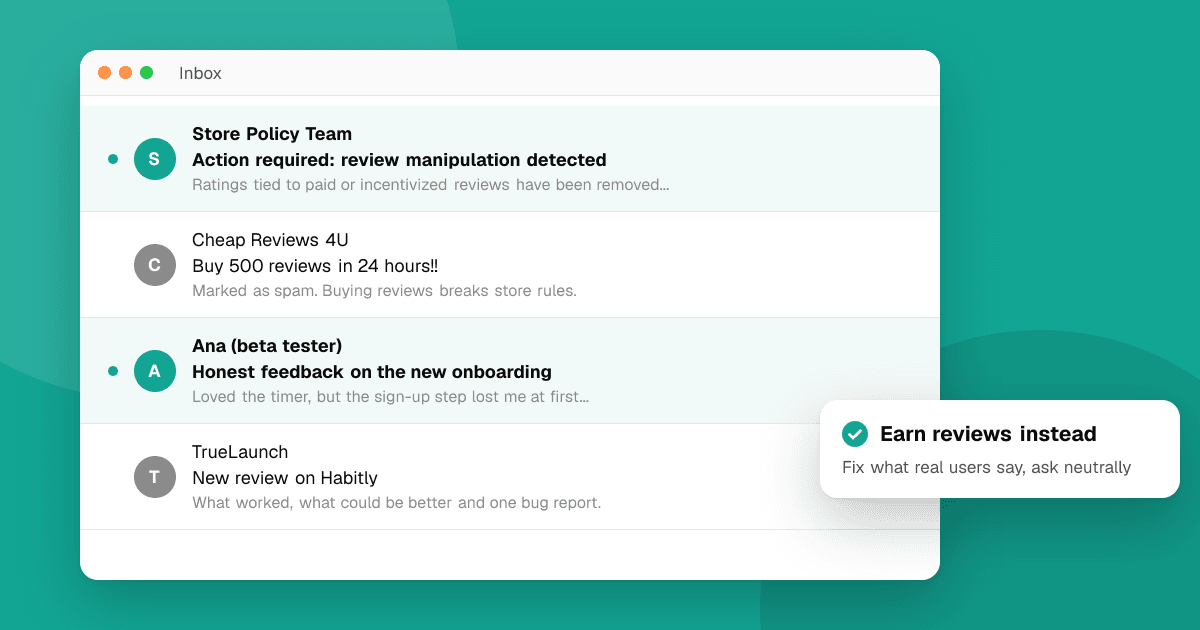
Short answer: buying reviews, trading ratings with other developers or rewarding users for a rating all break Google Play and App Store policies. Stores can remove the reviews, lower your visibility, reject updates or remove the app, and fake praise also hides the honest feedback you need to improve. Instead, build a better app with real feedback, ask for reviews neutrally through the official in-app review prompts, and grow through channels that bring genuine users.
What counts as a fake or incentivized review?
Store policies cover more than paying a review farm. All of these are against the rules:
- Paying for reviews or ratings, directly or through a service.
- Rewarding a rating: coins, items, extra lives, premium features, discounts or giveaway entries for leaving a review.
- Rating swaps: "I'll rate your app 5 stars if you rate mine." Trading ratings with other developers is still manipulation.
- Reviews from people connected to you posing as ordinary users: employees, family accounts or multiple accounts you control.
- Review gating: asking "Do you like the app?" and only sending happy users to the store while unhappy ones go to a feedback form.
- Paid installs designed to inflate rankings, such as install farms or bots.
Google Play's policy on ratings, reviews and installs prohibits manipulating them, including incentivized ratings. Apple's App Review Guidelines also prohibit manipulating ratings and reviews and require developers to use Apple's own API to prompt for ratings.
What happens if I get caught?
Both stores use automated systems and human review to spot suspicious patterns: sudden bursts of five-star reviews, reviews from related accounts, or similar wording across many reviews. Consequences can include:
- Removal of the suspicious ratings and reviews.
- Lower visibility in search and charts.
- Rejected updates or warnings on your developer account.
- Removal of the app and, for repeated or serious violations, termination of the developer account.
Even if nothing happens immediately, you're building on something that can disappear overnight.
Why does it backfire even if no one notices?
- You lose real signal. Fake praise drowns out the users telling you what's broken. You can't fix problems you can't see.
- Users notice. Generic, gushing reviews next to a mediocre app look suspicious. People read low-star reviews before installing anyway.
- Ratings don't keep users. A high rating may get an install, but if the app disappoints, people uninstall and leave the honest reviews you were trying to avoid.
- It wastes money you could spend on improving the app or reaching real users.
What should I do instead?
Get honest feedback before you launch
Find problems while they're cheap to fix. Run a beta test, watch new users try the app and ask specific questions: what worked, what could be better, what broke. Our guide to getting honest feedback on your app covers how.
Ask for reviews the right way
Use Google Play's In-App Review API and Apple's review prompt. Show them after a positive moment, never ask for a specific rating, and never offer anything in return. Details in how to ask for app store reviews the right way.
Reply to reviews and fix what they mention
Thoughtful replies to critical reviews show future users that you care. When you ship a fix, say so in your reply. Some users update their reviews on their own after a problem is solved.
Grow through real channels
- Communities where your target users already are.
- Short videos and devlogs that show the app or game in action.
- Launch boards and discovery sites. On TrueLaunch, listing is free and ratings come only from reviews written on the site. Sponsored spots exist, but they are always labeled and never change ratings, reviews or organic ranking.
What if competitors are faking reviews?
You can report suspicious reviews through each store's reporting tools. Don't respond by faking your own. Apps built on real ratings are safer when stores crack down, and you'll have the honest feedback that helps you keep improving.
Next steps
Remove anything in your app that rewards ratings or filters users before the review prompt. Then set up a neutral prompt and start collecting real feedback: list your app on TrueLaunch to get structured reviews from people you don't know.
Frequently asked questions
Is it okay to give users a reward for leaving a review?
No. Rewarding ratings or reviews with coins, features, discounts or giveaway entries is incentivized reviewing, and both Google Play and the App Store forbid it.
Are rating swaps with other developers allowed?
No. Trading ratings is still manipulation. Testing each other's apps and giving honest private feedback is fine; exchanging store ratings is not.
What is review gating?
Asking users if they like the app first and sending only happy users to the store. Google's in-app review guidelines don't allow asking such questions before the review prompt.
Does TrueLaunch sell reviews or rankings?
No. Ratings on TrueLaunch come only from reviews written on the site. Sponsored spots are always labeled Sponsored and never change ratings, reviews or organic ranking.