How to get press coverage for your app or game as an indie developer
Journalists get hundreds of pitches a week. Here is how indie developers find the right writers, build a press kit and send a short pitch that gets read.
· 4 menit baca
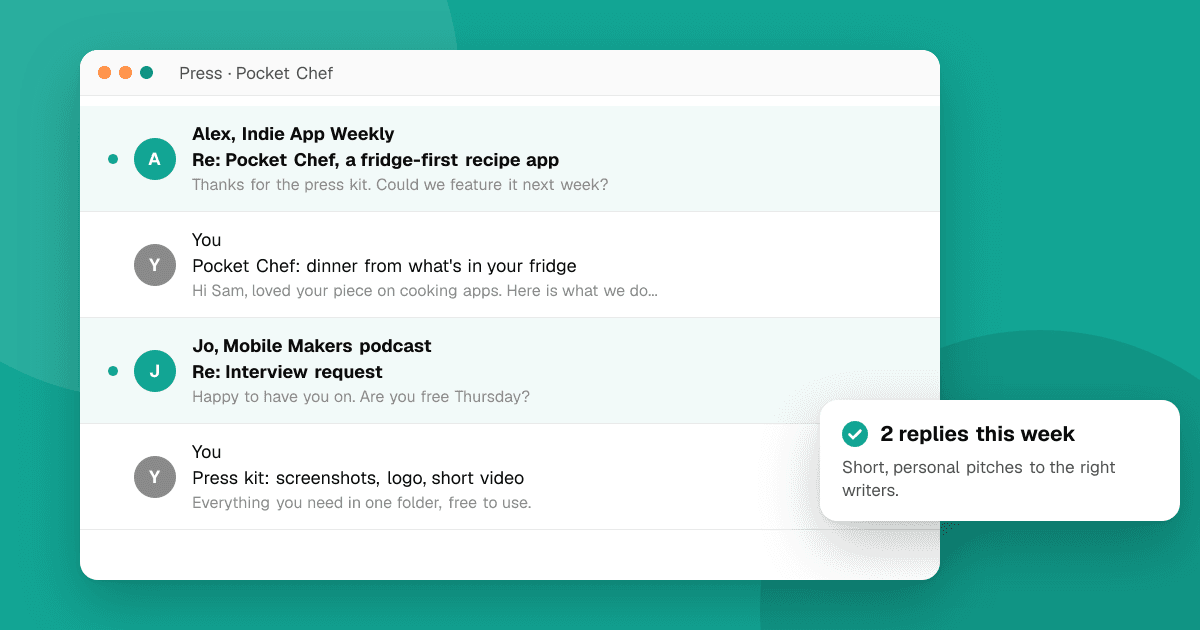
Short answer: pitch a small number of writers who already cover apps or games like yours, with a short personal email that says what is new and why their readers would care. Make it easy to say yes: a one-page press kit with screenshots, a short video, a download link and your contact details. Start with niche blogs, newsletters and YouTube channels, not the biggest tech sites. Follow up once, then move on.
Is press coverage worth it for an indie app?
Coverage can bring a burst of downloads, links that help your site rank in search, and credibility you can quote on your store page and landing page. It rarely saves an app on its own, though. A single article fades in days. Treat press as one channel next to communities, launch boards and your own audience, and aim for steady coverage in smaller outlets rather than one big hit.
Who should I pitch?
The best target is a writer who has covered something similar in the last few months.
- Search for apps or games like yours and note who wrote about them: blogs, newsletters, podcasts, YouTube and TikTok creators.
- Read two or three of their recent pieces. Do they write reviews, roundups, news or interviews? A roundup writer wants a one-line hook; an interview writer wants a story.
- Build a small list of 20 to 40 people, with name, outlet, what they cover and a link to a relevant article.
- Prefer niche over big. A newsletter about productivity tools or a blog about cozy games reaches exactly your audience, and its writer is far more likely to reply.
Local press is worth a try too. "Local developer builds app for..." is a story regional outlets like, and it gives you a first article to point to.
What should a press kit include?
A press kit is one page (on your site, or a shared folder) with everything a writer needs without emailing you:
- One-paragraph description and a one-line summary.
- Key facts: platforms, price or business model, release date, languages, team size and location.
- Store links or a pre-release build or promo code if the store supports it.
- Screenshots in high resolution, without heavy marketing text.
- A short video or trailer, 30 to 90 seconds.
- App icon and logo as PNG files.
- Your story in a few sentences: why you built it, who it's for.
- Contact: a real name and email.
How do I write a pitch that gets read?
Keep it under 150 words. Writers decide in seconds.
- Subject line: what it is and what's new. "Offline budgeting app for freelancers launches on Android and iOS" beats "Exciting news!".
- First line: why you're writing to this person. Mention the related piece they wrote, honestly and briefly.
- The hook: one or two sentences on what makes the app different. A real angle works best: a problem you solved for yourself, an unusual feature, a surprising design choice.
- Links: store page or build, press kit, video.
- Close: offer an interview, a build or answers to questions. No pressure, no fake deadlines.
Send each pitch individually. Mass emails with a generic greeting are easy to spot and easy to ignore.
When should I pitch?
- Before launch (one to two weeks): offer an early look under embargo if the writer wants it, so the article can go out on launch day.
- On a real milestone: launch, a major update, a new platform, a notable partnership, or an interesting story from your users.
- Not on weekends or late Friday, when inboxes are quiet and pitches get buried by Monday's pile.
Follow up once, about a week later, with one new detail. If there is no reply after that, stop. Silence is an answer, and the writer may still remember you next time.
What should I avoid?
- Paying for "reviews" disguised as editorial. Sponsored content must be labeled; paid coverage presented as independent harms your reputation and breaks advertising rules in many countries.
- Attachments full of large files. Link to them instead.
- Exaggerated claims. "The best app ever made" makes writers stop reading. Specific, checkable facts work better.
- Arguing with a critical article. Thank the writer, fix what was fair, and move on.
How do I make coverage keep working?
- Quote it (briefly, with permission where needed) on your landing page and in your store description where the store's rules allow.
- Share it with your community and on social media, tagging the outlet.
- Thank the writer and keep them updated on major releases. A writer who covered you once is your best contact for the next update.
- Note what worked: which outlets sent visits and installs, and which angle got replies.
Next steps
Build your press kit this week, then list 20 writers who have covered something like your app. Before launch, put the app where curious early users already look: list it on TrueLaunch and plan a day on the launches board. Our guides on writing a launch post and where to launch your app help you line it all up for one day.
Frequently asked questions
Should I pay for app reviews on blogs?
Paid placements must be clearly labeled as sponsored. Paying for coverage that looks independent misleads readers and can break advertising rules. Pitch writers honestly instead.
How many journalists should I contact?
A focused list of 20 to 40 writers who have covered similar apps or games works better than hundreds of generic emails. Personal pitches get far more replies.
What is an embargo?
An agreement that a writer can see your app early but won't publish before a set date and time, usually your launch. Only offer it if you can share a working build in advance.