How to write a launch post that people actually read
How to write a launch post for your app or game: a simple structure, a real example, how to adapt it for each community and the mistakes that get posts ignored.
· 5 min read
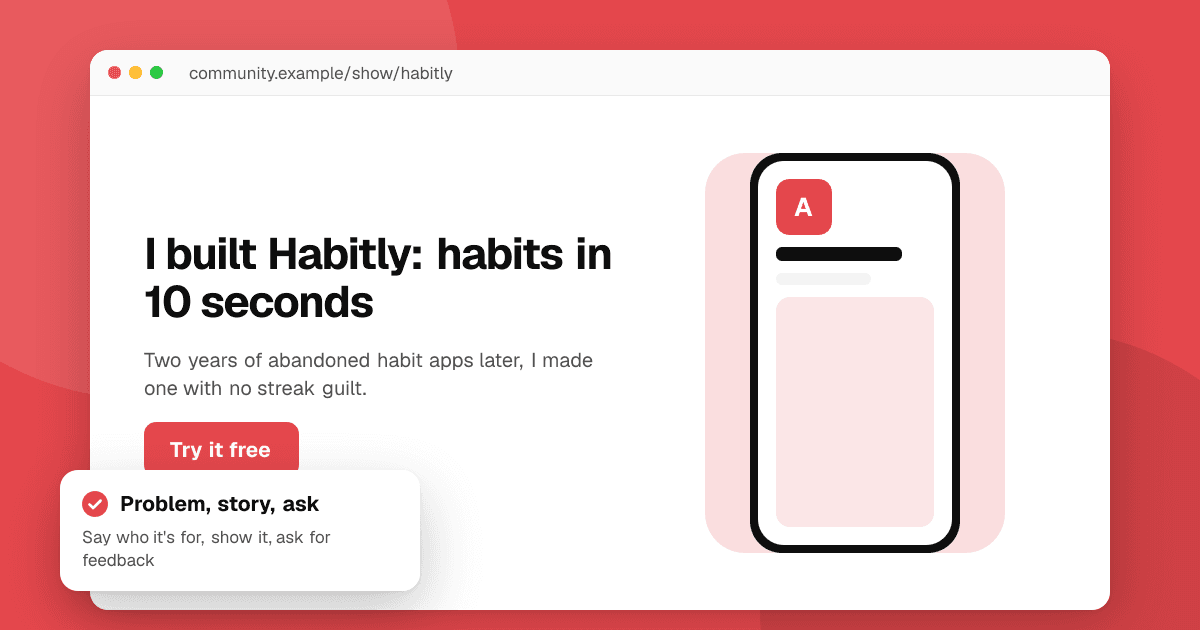
Short answer: lead with the problem, not the product. In the first line, say who the app is for and what it helps them do. Then show it (a screenshot, GIF or short video), explain briefly why you built it and what makes it different, and end with one clear ask, like "try it and tell me what's confusing". Keep it short, write like a person, adapt it to each community, and stay around to reply.
Why do most launch posts get ignored?
Because they're about the maker, not the reader. "Excited to announce v1.0 of FocusFlow, the revolutionary productivity platform!" tells nobody whether they should care. People scroll past anything that doesn't answer "is this for me?" within a few seconds.
What structure works?
Use five parts, in this order.
1. The hook: who it's for and what it does
One or two sentences. Name the person and the problem.
- Weak: "Introducing FocusFlow, a next-generation productivity app."
- Strong: "I kept losing whole afternoons to my phone, so I built a focus timer that locks distracting apps until the session ends."
2. Show it
A screenshot, GIF or 15 to 30 second video right after the hook. For games, gameplay footage beats everything else. Show the app doing its main job, not a logo animation.
3. Why you built it
Two or three sentences of honest story. Real reasons ("I'm a nurse and couldn't find a shift tracker that worked offline") build trust and make people want to help.
4. What makes it different
Two to four short points. Be specific and honest:
- Works fully offline
- No account needed
- Free, with one optional upgrade for themes
Avoid "the best", "revolutionary" and "game-changing". Let the details do the work.
5. One clear ask
Tell people exactly what would help. Pick one:
- "Try the first level and tell me where you got stuck."
- "What's missing for you to use this every day?"
- "If you know someone who tracks shifts, I'd love you to share it with them."
Never ask for a store rating, and never offer anything in exchange for one. Ask for feedback instead.
A complete example
I built a shift tracker for nurses that works without signal
I'm a nurse, and our hospital basement has no mobile signal. Every shift app I tried needed to be online, so I built ShiftLog: add your shifts, see your hours and overtime for the month, and export it for payroll. Everything works offline.
[30-second screen recording]
- Works fully offline, syncs when you're back online
- Handles night shifts that cross midnight
- Free, no account needed
It's my first app, built over six months of evenings. I'd love feedback from anyone who works shifts: what's confusing, and what's missing for you to use it every week?
Android: [link] · iPhone: [link]
It's under 150 words, says who it's for in the first line, shows the app, and ends with a specific question.
How do I adapt the post for each place?
The core stays the same; the framing changes.
- Launch boards (like the TrueLaunch launches board or Product Hunt): a short tagline, a clear gallery of screenshots, and a first comment telling your story and inviting questions.
- Hacker News (Show HN): plain, factual title, no marketing words, and a comment about how it works technically.
- Reddit and topic communities: check the rules, lead with the problem you share with the community, and make the post useful even to people who never click the link.
- Developer communities: share what you learned building it: the stack, a hard problem you solved, numbers if you have them.
- Social media: lead with the video. The first second decides whether people keep watching.
- Email to your list: personal and short. These people already know you; just tell them it's live and what you need.
What about the title?
The title does most of the work. Good titles are:
- Specific: "A budgeting app for freelancers with irregular income" beats "My new finance app".
- Benefit-first: what the reader gets, not what the app is called.
- Honest: don't promise what the app doesn't do.
Write five versions and pick the one a stranger would understand fastest.
What mistakes should I avoid?
- Burying the point. If it takes a paragraph to learn what the app does, people leave.
- Hype words like "revolutionary", "disruptive" or "the only app you'll ever need".
- Feature lists with twenty items. Pick the three that matter most.
- Missing links, or links that only work on one platform without saying so.
- Asking for upvotes or ratings in exchange for anything, or joining upvote rings. It breaks most platforms' rules.
- Posting and leaving. The replies in the first few hours are where people decide to try it.
How should I handle replies?
- Reply to every comment, especially critical ones. Thank people and answer the actual question.
- If someone finds a bug, thank them publicly and say when it'll be fixed.
- Don't argue. If someone doesn't see the point, ask what they use instead; it's useful research.
Next steps
Write your hook in one sentence today, then build the rest of the post around it using the five parts above. Plan where you'll post with where to launch your app, and submit your app to TrueLaunch so you can pick a launch day and collect honest reviews from people who try it.
Frequently asked questions
How long should a launch post be?
Usually 100 to 250 words. Say who it's for and what it does in the first line, show it, explain why you built it, list a few differences and end with one clear ask.
What should I ask for in a launch post?
One specific thing, usually feedback: where people got stuck or what's missing. Never ask for store ratings or offer anything in exchange for one.
Should I post the same launch text everywhere?
Keep the core the same but adapt it: a short tagline for launch boards, a technical angle for Hacker News, a community-first framing for Reddit and a video-first post for social media.