How to find playtesters for your indie game
Where indie developers find playtesters who actually play: your own circle, genre communities, devlog followers and discovery sites, plus how to run the test.
· 5 min de lectura
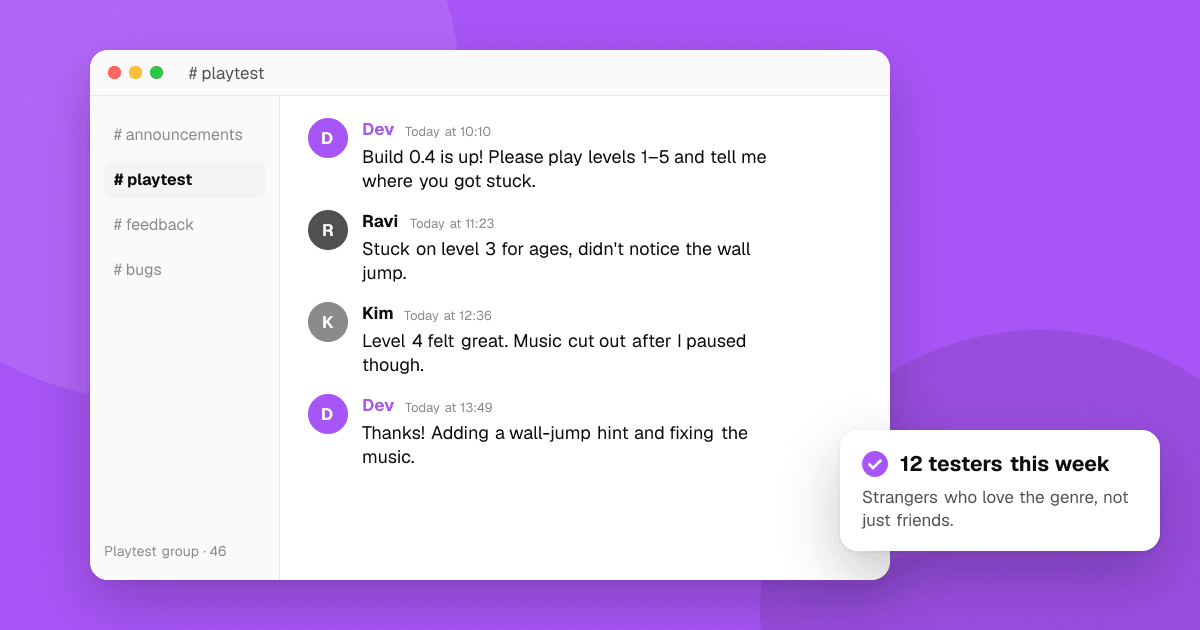
Short answer: the best playtesters are people who already enjoy your genre and have no reason to be polite. Start with a few people you can watch play, then recruit from communities where players of your genre spend time, from your devlog followers and from sites where people like trying new games. Give each tester a build that installs easily, one or two clear goals and a short set of questions. Ten engaged testers teach you more than a hundred who install and forget.
Why do I need strangers, not just friends?
Friends are a fine first round. They'll catch crashes and obvious confusion. But they finish your tutorial because they like you, not because it is fun. Strangers quit the moment they are bored, and that is the signal you need: where do people stop playing?
You want three kinds of testers over the life of the project:
- Two or three people you can watch play in person or on a screen share. You'll see confusion they would never write down.
- Players of your genre who compare your game with the ones they already love.
- Complete newcomers to the genre, if you want a wider audience. They show you which conventions you assumed everyone knows.
Where can I find playtesters?
Your own circle and devlog followers
Anyone who follows your progress on social media, a Discord server or a mailing list is already curious. Post a short message: what the game is, what kind of feedback you need and how long it takes. Followers who signed up because they like the look of your game are often your most motivated testers.
Genre communities
Find the places where fans of your genre talk: subreddits, Discord servers, forums and groups dedicated to roguelikes, cozy games, puzzle games, card games and so on. Read each community's rules first. Many allow playtest requests in a specific channel or thread, or on a certain day. Be a member, not just a poster: people respond better to someone they have seen before.
Developer communities
Other indie developers are often happy to swap playtests. Developers give sharp, technical feedback about controls, feel and bugs. Keep it honest: real play sessions and real notes, never a trade of store ratings.
Discovery sites and launch boards
Some players actively look for new games to try. On TrueLaunch you can list your game for free from a Google Play or App Store link and collect structured reviews from people you don't know: what worked, what could be better and which bugs they found. That format is close to what you'd ask testers anyway.
Local events and game jams
Local meetups, game dev nights, university clubs and showcases let you watch people play your game for a few minutes. Short sessions are perfect for testing the first five minutes, which is where most players decide whether to keep going.
How do I get the build to testers?
Make installing as easy as possible, because every extra step loses people:
- Android: use a Google Play testing track. Internal testing is fastest for small groups; closed testing works with an email list or a Google Group. New personal developer accounts need a closed test with 12 testers for 14 days anyway, so it's worth recruiting for that track. See how to get 12 testers for Google Play.
- iOS: use TestFlight. A public link lets testers join without you collecting emails.
- PC or web builds: a password-protected page or a private store key keeps the test focused.
Our comparison of beta testing platforms covers the options in more detail.
What should I ask playtesters to do?
"Play it and tell me what you think" produces vague answers. Instead:
- Give one or two goals, like "play until you unlock the second world" or "try three runs".
- Ask them to think out loud if you are watching. Don't explain anything; just take notes.
- Ask the same short questions afterwards:
- What was fun, and when did you feel it?
- Where were you confused or bored?
- Did anything break? What were you doing, and on which device?
- Would you play again tomorrow? Why or why not?
Asking everyone the same questions makes it easy to spot patterns. If three testers stop at the same level, that level is the problem, no matter what else they say.
How do I keep testers engaged?
- Say thank you and show changes. Post a short "you asked, we fixed" note with each new build.
- Keep sessions short. A 15-minute test that people finish is better than an hour-long one they abandon.
- Credit testers in your game's credits or community, if they want it.
- Don't overload them. One build every week or two is plenty for most volunteer testers.
What should I avoid?
- Paid install farms or fake testers. They inflate numbers and give you no feedback.
- Asking testers for store ratings. Never make a rating or review part of the deal, and never reward one. Store policies forbid incentivized ratings, and it turns testing into marketing.
- Arguing with feedback. Ask follow-up questions instead: "What did you expect to happen there?"
Next steps
Write a two-line playtest request today, share it with your followers and one genre community, and set up a testing track so installing takes one tap. Then list your game on TrueLaunch to get structured reviews from players you've never met. When the test is done, our indie game launch checklist covers what comes next.
Frequently asked questions
How many playtesters do I need?
Five people watched one at a time find most big usability problems. For balance, difficulty and retention, aim for 15 to 30 engaged testers who play more than one session.
Should I pay playtesters?
You can pay for professional usability testing, but never pay for installs, store ratings or reviews. For most indie games, volunteers who love the genre give the best feedback.
When should I start playtesting my game?
As soon as the core loop is playable, even with placeholder art. Early tests tell you whether the game is fun before you spend months on content.
Can I find playtesters on TrueLaunch?
You can list your game for free and people who like trying new games can review it. Every review covers what worked, what could be better and which bugs they found.