Free trials for apps: length, timing and honest trial reminders
How long should a free trial be, when should you offer it, and how do you remind people before they're charged? An honest guide to app subscription trials.
· 3 min de leitura
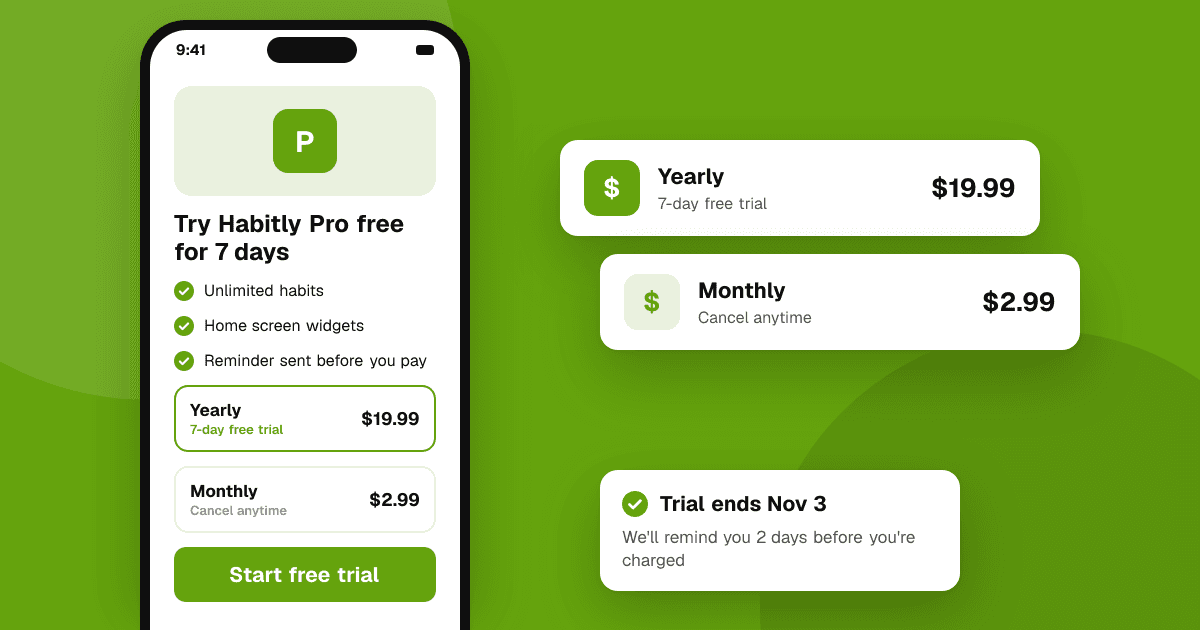
Short answer: offer a trial long enough for people to reach the moment your app proves its value, usually 3 to 14 days, and offer it after users have seen what the app does. Show the price and the date the trial ends before they start, remind them before it renews, and make cancelling easy. Use the stores' built-in trial features (introductory offers on the App Store, free-trial offers on Google Play) so billing and eligibility are handled for you.
Do I need a free trial at all?
Trials help when the value of your paid plan takes time to show: a habit app, a learning app, a tool people use weekly. They're less useful when:
- The free tier already lets people see the paid value.
- Your paid feature is a one-time unlock (offer a one-time purchase instead; see in-app purchases vs subscriptions).
- Each trial user costs you real money (servers, AI calls) and you can't limit abuse.
How long should a free trial be?
Match the trial to how long it takes to feel the value:
- 3 days: apps whose value shows in a single session or two.
- 7 days: the most common choice; covers a full week of habits or work.
- 14 to 30 days: tools used weekly or apps that need setup before they're useful.
Shorter trials convert faster; longer trials can convert more people overall if they really need the time. Test one change at a time.
When should I offer the trial?
- After a taste of value, not on the first screen before people know what the app does.
- At a natural limit: when they hit a free-tier cap or try a paid feature.
- Once onboarding is done, so the trial days aren't spent on setup.
How do I make a trial honest?
- Show the full price and when charging starts on the paywall, in the user's currency.
- Say how to cancel in one sentence ("Cancel anytime in your store subscriptions").
- Remind before renewal. A notification or email a day or two before the trial ends builds trust and lowers refund requests and angry reviews.
- No tricks: no pre-ticked yearly plans, no hidden "X" button, no fake countdowns.
These rules are also store policy. Both Apple and Google review paywalls, and unclear trial terms are a common cause of rejection (see common App Store rejections).
How do I set trials up in the stores?
- App Store: create an introductory offer with a free trial on your subscription in App Store Connect. Each user is eligible once per subscription group.
- Google Play: add a free-trial offer to your subscription's base plan in Play Console, with eligibility rules such as new customers only.
- Read prices and trial length from the store at runtime, so the paywall always shows correct local values.
What should I measure?
- Trial start rate from the paywall.
- Trial-to-paid conversion and how it changes with trial length.
- Refunds and cancellations in the first week after charging.
- Reviews mentioning billing. Complaints there usually mean the terms weren't clear.
Next steps
Pick a trial length that matches when users first feel the value, rewrite your paywall so price and end date are visible, and add a reminder before renewal. Then get honest reactions from real people: list your app on TrueLaunch and read what reviewers say about your paywall. This is general guidance, not legal or financial advice.
Frequently asked questions
How long should a free trial be for a subscription app?
Long enough for users to experience the main value. Seven days is the most common choice; apps used weekly or that need setup often use 14 days or more.
Should I remind users before their free trial ends?
Yes. A reminder a day or two before charging builds trust and reduces refunds, chargebacks and angry reviews, even if a few people cancel.
Can a user get my App Store free trial more than once?
Generally no. An introductory offer is available once per user per subscription group, and Apple checks eligibility for you.