From game jam prototype to mobile release: a practical plan
Your game jam entry got great feedback. Here is how to decide if it's worth finishing, rebuild it properly and take it to Google Play and the App Store.
· 5 min de leitura
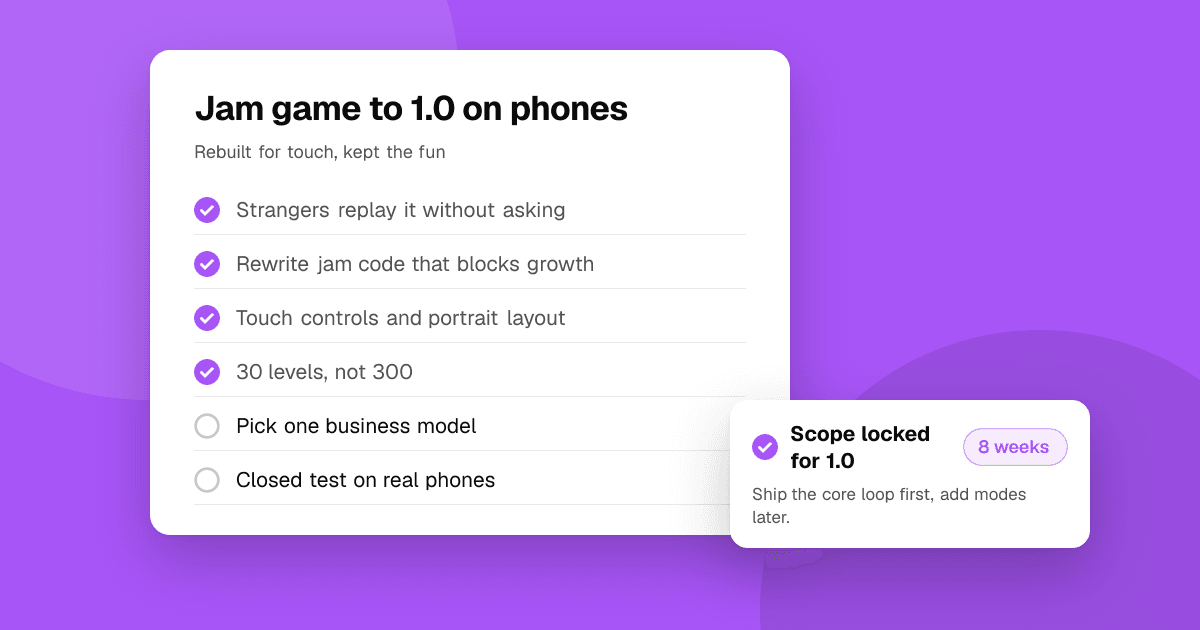
Short answer: first check that the idea is worth it: people who didn't know you should enjoy the jam version and want more. Then write down the core of what made it fun, rebuild the code cleanly instead of extending jam code, plan a small 1.0 with a fixed scope, adapt it for phones (touch controls, short sessions, performance) and test with strangers before launch. Many jam games make great small releases; few survive becoming a huge project.
Is my jam game worth turning into a full release?
Jam feedback is encouraging by nature. Before you commit months, look for stronger signals:
- Strangers keep playing. Not just jam participants rating entries, but people who found the game on their own and played more than once.
- People ask for more. "Is there a full version?" or "I want more levels" is a much better sign than "nice idea".
- The fun is in the core loop, not in a one-time joke or surprise that only works once.
- You can describe a bigger version in one sentence without adding a completely different game.
- You still want to work on it after the jam excitement fades. Give it a week, then decide.
If several of these are missing, consider releasing the jam version as a free download and moving on. That is a perfectly good outcome.
What should I do with the jam code?
Jam code is written to ship in 48 hours. It usually has hard-coded values, no save system and shortcuts everywhere. In most cases:
- Keep the jam build as a reference of how the game should feel.
- Rebuild the core properly in a fresh project: clean structure, settings in data files, a real save system.
- Reuse assets that still fit, but check licenses for anything you didn't make yourself, especially if the jam allowed free assets with non-commercial terms.
- Check team agreements. If you made the game with others, agree in writing who owns what and how revenue is shared before going further.
How do I plan a 1.0 that actually ships?
Scope is what kills jam-to-release projects. Plan small:
- Write the one-page design document: pitch, pillars, core loop, target player, out of scope. Our guide on writing a game design document has a template.
- List content for 1.0 in a table: levels, modes, characters. Then cut a third of it.
- Pick a target date two to four months out for a small game, and work backward.
- Decide monetization now: premium, ads, or in-app purchases. It changes level structure, menus and store setup.
- Keep a "later" list for every new idea. Updates after launch are where those ideas go.
What changes when a jam game goes to phones?
Many jam games are made for keyboard and desktop. On mobile, check:
- Controls. Rethink inputs for touch: large tap targets, no tiny buttons near screen edges, and no precision that fingers can't do.
- Session length. Players often play in short bursts. Make levels short and save progress constantly.
- Orientation and screen sizes. Test on small phones, tall phones and tablets. Keep important UI away from notches and rounded corners.
- Performance. Test on an older, low-memory Android phone. Watch load times, frame rate, battery and heat.
- Interruptions. Calls, notifications and app switching should pause the game safely without losing progress.
- Onboarding. Jam players read a description first; store players don't. Teach the game by playing in the first minute. See mobile game onboarding.
How should I pick a business model?
Jam games are free to play in a browser, so think early about how the mobile version will earn money, if at all:
- Premium (paid up front). Simple and player-friendly, but harder to get downloads without visibility. Works best for games with a clear hook and a finished feel.
- Free with a one-time unlock. Players try the first levels free and buy the rest once. A natural fit for level-based jam games.
- Free with ads. Suits short-session games with lots of replays. Prefer optional rewarded ads over interruptions mid-level.
- Free with in-app purchases. Cosmetics or extra content. Avoid designs that make the game harder to push purchases.
Whatever you choose, describe it honestly on your store page, and plan the store setup (pricing, in-app products, ad SDK privacy disclosures) before launch week.
How do I test before release?
- Playtest early with people who never saw the jam version. The full game must work without jam context.
- Use the stores' testing tools. TestFlight on iOS and Play Console testing tracks on Android. New personal Google Play accounts need a closed test before production; our guide on getting 12 testers for closed testing explains it.
- Collect structured feedback: what worked, what could be better, which bugs showed up and on which device.
How do I launch it?
- Use your jam audience. Post on the jam page and your devlog that a full version is coming, and collect emails or Discord members.
- Prepare the store listing: an icon that reads at small sizes, gameplay screenshots, a short video.
- Pick a launch day and concentrate your posts there. Our indie mobile game launch checklist covers the details.
Next steps
Decide this week whether your jam game passes the "strangers want more" test. If it does, write the one-page plan and rebuild the core. When you have a playable build, list it on TrueLaunch to get honest reviews from players who have never seen it before.
Frequently asked questions
Should I reuse my game jam code for the full release?
Usually not. Keep the jam build as a reference for how the game should feel, and rebuild the core cleanly with a real save system and settings in data files.
How long does it take to turn a jam game into a mobile release?
It depends on scope. Planning a small 1.0 with a fixed content list and a target date a few months out keeps the project finishable.
Can I use assets from my game jam in a commercial release?
Only if their licenses allow commercial use. Check every asset you didn't make yourself, and agree on ownership with any teammates before releasing.