How to get backlinks for a new app or startup (without buying them)
Honest ways to earn backlinks for a new app or startup: press, review sites, best-of lists and useful content, plus domain rating vs domain authority explained.
· 5 min read
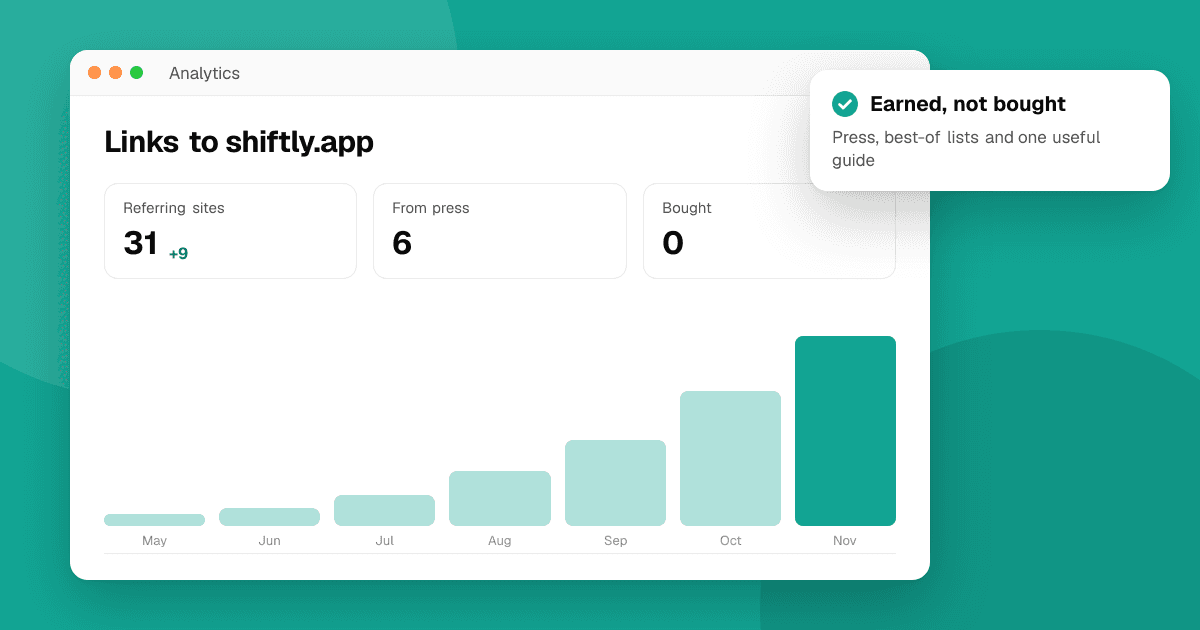
Short answer: backlinks that help a new app are earned: a journalist or blogger writes about it, a "best apps for X" list includes it, or another site links to something useful you published. Start with the people who already cover your niche (app review sites, niche blogs, newsletters, podcasts), give them a reason to mention you, and publish one or two pages worth linking to. Launch sites and directories mostly give nofollow links: they bring visitors and new pages that rank for your name, which leads to the editorial links, but they won't raise your domain rating by themselves. Never buy links.
This guide is published by TrueLaunch. Links from TrueLaunch listings are nofollow, so listing here won't raise your domain rating directly; what it gives you is a page that can rank for your app's name, visitors and honest reviews.
What is a backlink and why does it matter?
A backlink is a link from another website to yours. Search engines treat links from relevant, trusted sites as a sign that your page is worth showing, so a new app website with no links often struggles to rank even for its own name. Links also send visitors directly, which for a new app can matter more than any ranking effect.
What's the difference between dofollow and nofollow links?
- Followed ("dofollow") links are ordinary links. They can pass ranking signals to the page they point to.
- Nofollow links carry
rel="nofollow"(orrel="ugc"for user content andrel="sponsored"for paid links). They ask search engines not to treat the link as an endorsement. Google treats them as a hint, but you shouldn't expect them to help rankings.
Most places where you can add a link yourself (directories, launch boards, forums, social profiles, comments) use nofollow, because otherwise spammers would flood them. That's why self-made links rarely move rankings and earned links do.
Domain rating vs domain authority: what's the difference?
Both are third-party scores that estimate how strong a site's backlink profile is. Google uses neither.
| Score | Made by | Scale | Based on |
|---|---|---|---|
| Domain Rating (DR) | Ahrefs | 0 to 100 | The quantity and strength of sites linking to you |
| Domain Authority (DA) | Moz | 1 to 100 | A model of how likely a site is to rank, built from link data |
They're useful for comparing sites and tracking your own progress, but they're estimates from each company's own crawler, so the same site gets different numbers in each tool. To increase either one, earn links from sites that already have strong links themselves. There is no shortcut: services that promise a "guaranteed DR 50" usually sell links from networks built only to inflate the number, which Google ignores or penalizes.
How do I get backlinks for a new app?
Get covered by people who write about apps
Find the writers, blogs, newsletters and YouTube channels that cover your niche or your platform. Send a short, personal pitch: who the app is for, what's new about it, a link and a few screenshots. See how to get press coverage for your app for a pitch template, and app review sites for places that review apps.
Get onto "best apps for X" lists
Search for "best [your category] apps" and "[competitor] alternatives". Many of those articles are updated every year. Email the author with one honest sentence on why your app belongs on the list and what it does differently. A small, specific list in your niche is worth more than a giant generic one.
Publish something worth linking to
People link to pages that help them: a free tool, a template, original data ("we analysed 10,000 workouts logged in our app"), a clear guide to a problem in your niche. One genuinely useful page on your website can earn links for years.
Use your story and expertise
Answer journalists' requests for sources in your field, appear on podcasts for indie developers or your niche, and write guest posts for sites your users read. Each is a natural place for a link to your app's website, as long as the content stands on its own.
Turn partners and integrations into links
If your app works with another product, an "integrations" or "partners" page on their site is a natural link. Open-source libraries you publish, and the README that credits your app, can do the same.
Do directories and launch sites help?
Yes, but mostly through people, not links. A launch on a site like TrueLaunch, Product Hunt or a launch board in your niche gets your app in front of early users, writers and other developers; that's where many of the editorial links above start. Most of these sites use nofollow links (TrueLaunch does), and some sell a "dofollow link" upgrade: check what you actually get before paying. Pick a handful that real people browse; see free app directories and Product Hunt alternatives.
What should I avoid?
- Buying links or "link packages". Google's spam policies treat paid links that pass ranking signals as link spam, and a penalty takes months to undo.
- Mass directory submissions. Services that submit you to hundreds of directories create low-quality links nobody clicks.
- Link exchanges at scale ("I'll link to you if you link to me") and private blog networks.
- Spam comments and forum signatures. They're nofollow anyway and get you banned from the communities that could have helped.
How long does it take?
Expect months, not weeks. A new site usually needs a few good links before it ranks for anything competitive. Meanwhile, make sure your app website's SEO basics are right, so every link you earn points at a page that deserves to rank.
Next steps
Pick ten sites that already write about your niche, read what they publish, and send each one a personal pitch on launch week. List your app on TrueLaunch for a launch day that puts it in front of early users, and read how to promote your app for free for more places to be seen.
Frequently asked questions
Does listing my app on TrueLaunch give me a backlink?
A link, but a nofollow one: TrueLaunch's outbound links ask search engines not to pass ranking signals, so a listing won't raise your domain rating directly. It gives your app a page that can rank for its name, visitors and honest reviews, which often lead to links from other sites.
How can I increase my domain rating quickly?
There is no safe quick way. Domain rating rises when sites with strong links of their own link to you, which comes from press, best-of lists and useful content. Services promising a fast DR increase usually sell links Google ignores or penalizes.
Does Google use domain rating or domain authority?
No. Domain Rating (Ahrefs) and Domain Authority (Moz) are third-party estimates. They help you compare sites and track progress, but Google ranks pages with its own signals.